Front vs. Rear Projection on Stage Scrims: Which Setup Fits Your Show?
Choose front projection on a sharkstooth scrim when images should float, blend with light and vanish into a reveal; choose rear projection on a dedicated rear-projection scrim when lyrics, video or graphics must stay bright and shadow-free. Customized Stage Scrims makes both kinds of stage scrims to size, and this guide compares them on look, space, shadows and the shows each one suits.
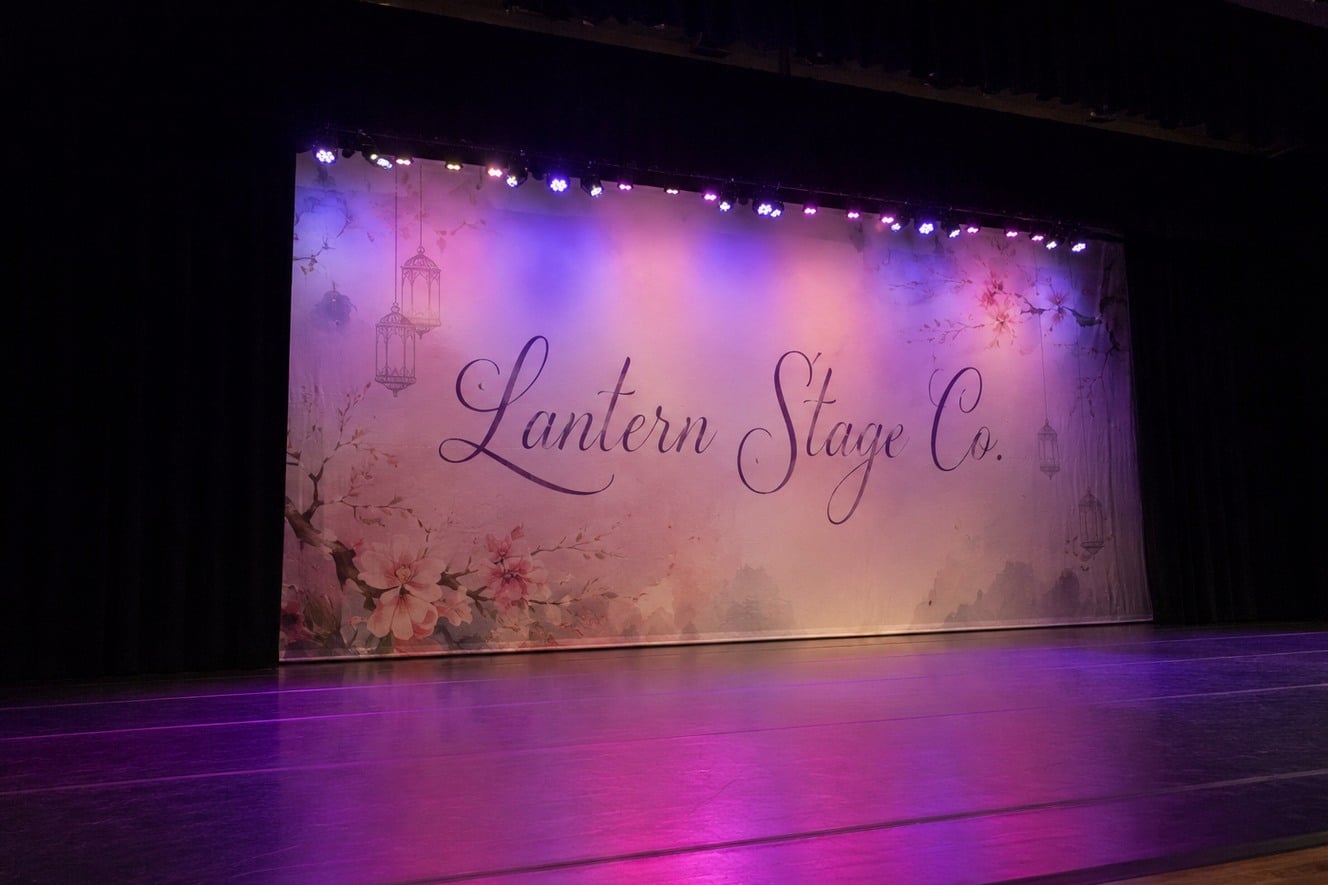
- Front projection on sharkstooth gives soft, layered images that can vanish when lit from behind
- Rear projection keeps text sharp and performers out of the beam
- Rear projection needs clear space upstage for the projector
- Free mockup within 24 hours; about 2 weeks to produce after approval
Should you project onto a stage scrim from the front or from behind?
Front projection onto stage scrims is the better choice when you want images to float in the air and then dissolve into a reveal, because an open-weave sharkstooth catches front light while staying see-through from behind. Rear projection is the better choice when the image must stay solid and bright while performers move freely downstage, because the projector sits upstage and nobody casts a shadow on the picture.
The decision is less about the projector and more about the fabric. A sharkstooth scrim and a dedicated rear-projection scrim behave very differently when light hits them from each side. Customized Stage Scrims builds both, so the right question to bring to a quote is what the audience should see, not which gear you already own.
Most productions land on one of three setups:
- Front projection on sharkstooth for ghostly, layered imagery that can vanish when the upstage area is lit.
- Rear projection on a rear-projection scrim for a clean, bright picture with no performer shadows.
- Both, with a downstage sharkstooth for texture and an upstage rear-projection surface for the main image.
How does front projection on a sharkstooth scrim actually look?
Front projection on a sharkstooth scrim looks soft, atmospheric and slightly translucent, because part of the projected light passes through the open weave instead of bouncing back to the audience. That quality is the point: the image reads as fog, memory or weather rather than a flat screen, and it disappears the moment you bring up light behind the scrim.
The trade-offs are predictable once you know them. Some projected light travels through the weave and lands on whatever is upstage, so a cyc, a wall or a set piece may show a faint second image. Designers handle this with a black void drape or by keeping the upstage area dark during projection cues. Fine text and small details also lose crispness on an open weave, so projection content for a sharkstooth works best when it is bold and painterly.
Front projection also asks for a clear throw path. Performers who cross between the projector and the scrim will cast shadows, which is why front-projected scrims usually hang downstage of the action or are used in scenes where the stage in front of them is empty.
For the full explanation of how the weave reacts to light, see the sharkstooth scrim page.

What does a rear-projection scrim do better than sharkstooth?
A rear-projection scrim does three things better than sharkstooth: it holds a brighter, more even image, it keeps fine detail and text legible, and it lets performers work directly in front of the picture without blocking the beam. The projector lives upstage, out of sight, and the audience sees only the image glowing through the surface.
That makes rear projection the natural choice for concerts, worship services, keynote stages and any show where lyrics, sponsor graphics or live camera feeds must read clearly from the back row. The surface reads as a screen, but as a fabric screen made to the stage’s exact size rather than a stock frame.
Rear projection does need depth behind the surface for the projector and its throw, and it gives up the classic reveal: a rear-projection scrim does not turn transparent when lit from behind the way sharkstooth does. If the show needs both the clean image and the vanishing act, plan two surfaces. Details on the fabric are on the rear-projection scrim page.
How do front and rear projection compare side by side?
Front and rear projection on stage scrims differ most in image clarity, shadow risk, backstage space and whether the surface can disappear. The table below summarizes how each setup behaves so a director, lighting designer and projection designer can agree before the quote goes in.
| Factor | Front projection on sharkstooth | Rear projection on a rear-projection scrim |
|---|---|---|
| Image character | Soft, layered, atmospheric | Bright, even, screen-like |
| Fine text and detail | Loses crispness | Stays legible |
| Performer shadows | Likely if actors cross the beam | None from the audience side |
| See-through reveal | Yes, when lit from behind | No |
| Space needed upstage | Little | Room for projector and throw |
| Spill onto upstage scenery | Possible, mask with black | Not an issue |
| Best for | Plays, dance, opera, illusions | Concerts, worship, corporate stages |
Neither column is the winner in general. The right answer depends on whether the image is the scenery or the message.
Which projection setup fits theater, dance, concerts and worship?
Theater and dance productions usually favor front projection on sharkstooth, while concerts, houses of worship and corporate events usually favor rear projection. The split follows the content: storytelling shows want images that blend with light and vanish, and presentation-style events want words and video that stay sharp.
- Plays and musicals: a downstage sharkstooth with front projection creates dream sequences, flashbacks and weather that dissolve into the live scene behind.
- Dance: front projection over a sharkstooth layers texture across dancers upstage, and a plain scrim often works better than a printed one so the projected content carries the look. The plain unprinted stage scrims page covers that option.
- Concerts: a rear-projection scrim behind the band keeps video content bright without the band throwing shadows on it.
- Worship services: rear projection keeps lyrics readable while worship leaders move freely across the platform.
- Corporate and keynote stages: rear projection hides the projector and keeps slides crisp.
Touring productions that play varied venues often carry both surfaces so they can adapt to houses with shallow or deep upstage space.
Can one show use a printed scrim and projection together?
Yes, printed stage scrims and projection work well together when the printed artwork is designed as a base layer and the projected content adds motion or changes the time of day. A printed skyline or forest on sharkstooth can hold the look under plain front light, then come alive when projected clouds, snow or color washes play over it.
The key is to keep the printed artwork lighter and less busy than a print meant to stand alone. Heavy dark areas absorb projected light, while mid-tones and soft gradients give projection something to sit on. Tell Customized Stage Scrims in the quote request that the scrim will also receive projection, and the free mockup, returned within 24 hours, can be adjusted with that in mind. Revisions are unlimited and free, and you pay nothing until you approve the design.
Printed cycloramas follow the same logic when projection is added from the front. The printed cyclorama page explains how a back-wall print interacts with light.
What should you tell the scrim maker about your projection plan?
The most useful details to share about a projection plan are where the projector will sit, what the content looks like, and whether the scrim must also disappear under light. Those three answers decide the fabric, and the fabric decides almost everything else about the look on opening night.
- Projector position: front of house, a balcony rail, onstage or upstage behind the surface.
- Content type: abstract textures and color, video footage, or text and graphics that must read clearly.
- Reveal needs: whether a scene requires seeing through the scrim to performers behind it.
- Upstage depth: how much clear space exists behind the hanging position.
- Masking: what hangs upstage and whether a black void drape is available to absorb spill.
- Size and rigging: batten width, trim height and the finish the venue uses.
With that list, Customized Stage Scrims can recommend sharkstooth, rear-projection fabric or a pair of both. The minimum order is 12, and standard production takes about 2 weeks after mockup approval, with faster turnaround available through express shipping. Start with the quote form, and see how it works for each step.
Frequently asked questions
Can a sharkstooth stage scrim show rear projection at all?
Sharkstooth stage scrims can receive rear projection, but most of the light passes straight through the open weave toward the audience, so the image looks faint and the projector hotspot may show. Productions that need a strong rear-projected picture usually choose a dedicated rear-projection scrim instead, and keep sharkstooth for front projection and see-through reveals where its open weave is an advantage rather than a weakness.
Why does a front-projected image show up twice on stage?
Stage scrims made from sharkstooth let part of a front-projected image pass through the weave, so a faint second copy lands on the cyc, wall or scenery upstage. Hanging a black void drape behind the scrim, or keeping the upstage area dark during projection cues, absorbs that spill. Customized Stage Scrims can quote the scrim and the masking together so both arrive ready for the same tech rehearsal.
Do performers block the image on a rear-projection stage scrim?
Stage scrims used for rear projection keep the projector upstage, so performers working downstage never cross the beam or cast shadows the audience can see. Performers only interfere if they walk between the projector and the surface backstage, which crews prevent by keeping that zone clear. That freedom is the main reason concerts and worship services prefer rear projection for lyrics and video.
Which projection direction suits a stage with very little upstage depth?
Stage scrims on shallow stages usually work best with front projection, because the projector can sit at the front of house or on a balcony rail instead of behind the surface. Rear projection needs clear space behind the scrim for the projector and its throw. Share the available depth in your quote request and Customized Stage Scrims will recommend the fabric that fits the room.
Can projected video replace printed artwork on a stage scrim?
Stage scrims can carry projected video instead of printed artwork when the content needs to move or change between scenes. A plain scrim gives the projection a clean canvas, while a printed scrim provides a look that holds even with the projector off. Many productions pick plain fabric for projection-heavy shows and printed fabric when the scenery must stand on its own during preshow.
Does scrim color affect how projected images look?
Stage scrims in white or light gray reflect projected light most brightly and show colors most faithfully, which suits most front and rear projection. Black scrims absorb much of the light, so images look darker but contrast with a black stage more subtly. Customized Stage Scrims can talk through color choice during the free mockup, returned within 24 hours, before anything goes into production.
Should projection content be designed differently for a sharkstooth scrim?
Stage scrims made from sharkstooth reward bold, high-contrast projection content, because fine lines and small text soften as light passes through the open weave. Large shapes, textures, color washes and slow-moving imagery read best. Projection designers often test content on a sample of the fabric, so mention projection in the quote request and Customized Stage Scrims can factor that into the fabric recommendation.
Can a scrim used for projection also be lit like a normal drop?
Stage scrims used for projection can still be lit conventionally between projection cues. A sharkstooth surface lit from the front looks solid, then turns see-through when light comes up behind it, whether or not a projector is involved. Rear-projection fabric can be washed with color from the front too, though it will not offer the same transparent reveal that sharkstooth gives.
What does a projection designer need from the scrim order?
Stage scrims ordered for projection should arrive with the exact finished size, fabric and hanging position confirmed, because projection designers map content to the surface edges. Share the approved mockup and final dimensions with the projection designer early. Customized Stage Scrims makes each scrim to the size you specify, so content can be built to those edges before the fabric is delivered to the venue.
Is it worth ordering two scrims so a show can switch between front and rear projection?
Stage scrims ordered as a pair, a downstage sharkstooth for front projection and an upstage rear-projection surface, give a production both soft layered imagery and a sharp, shadow-free picture. The pair is worth it when scenes demand both looks or the show tours to rooms with different depths. Customized Stage Scrims can quote both in one request, with a minimum order of 12.
How long does a projection-ready custom scrim take to produce?
Stage scrims for projection follow the same schedule as other custom scrims from Customized Stage Scrims: a free mockup within 24 hours, unlimited free revisions, and standard production of about 2 weeks after approval. Faster turnaround is available with express shipping. Leave time after delivery for the projection designer to align and focus content on the hung fabric before the first technical rehearsal.
Get a free mockup for your stage scrims
Send your logo or idea and the quantity you have in mind. Customized Stage Scrims returns a free mockup within 24 hours, you approve the design before anything is produced, and standard turnaround is about two weeks with faster options available. Get a custom quote.
Win Free Stuff
Enter below for a chance to win plus receive 10% off your first order.
🎉 You are in!
We will text you your 10% off code. Good luck!