First Custom Stage Scrim Order Mistakes and How to Avoid Them
The most common first-order mistakes with stage scrims are measuring the wrong opening, picking a fabric that cannot create the effect, skipping the lighting designer's review and forgetting finishes or fire paperwork. Customized Stage Scrims returns a free mockup within 24 hours, so each mistake can be caught on paper before production starts.
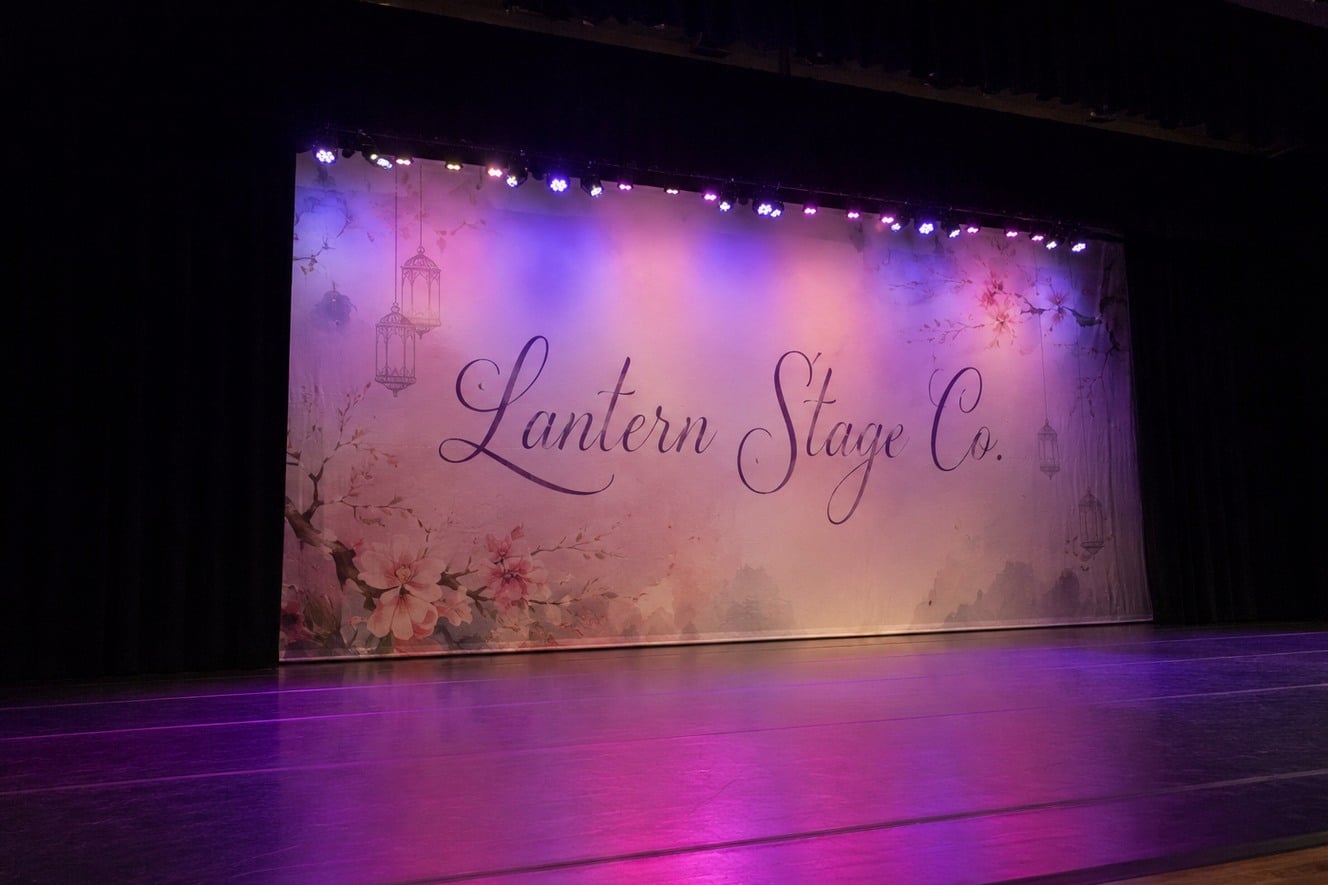
- Measure the batten and trim height, not just the proscenium
- Only sharkstooth creates the front-lit to back-lit reveal
- Free mockup within 24 hours, unlimited free revisions
- Pay nothing until you approve the design
- Production takes about 2 weeks after approval
What are the most common mistakes on a first custom stage scrim order?
The most common mistakes on a first custom stage scrim order are measuring the wrong opening, choosing a fabric for how it looks on a screen instead of how it behaves under light, skipping the lighting designer during mockup review, and forgetting the venue’s fire paperwork. None of these are production problems. Each one happens before the order is placed, which means each one can be avoided with a short checklist.
First-time buyers usually focus on the artwork, because that is the part everyone in the room can picture. The decisions that actually make or break stage scrims are quieter: how the top is finished, how the bottom is weighted, which way the fabric runs, and who signs off. Customized Stage Scrims returns a free mockup within 24 hours, so there is time to catch these issues on paper rather than on the batten.
The sections below walk through the mistakes in the order they tend to happen, from the first measurement to the day the scrim is unpacked in the theater.
Why does measuring the proscenium instead of the batten cause problems?
Measuring only the proscenium opening causes problems because stage scrims hang from a batten or track, and the batten is rarely the same width as the visible opening. A scrim cut to the proscenium can leave gaps at the sides where the audience sees the wings, or it can be too short to clear the masking legs once it is tied on.
Height is the other half of the mistake. Buyers often measure from the stage floor to the bottom of the border, then forget the scrim must also reach its trim height without the pipe pocket showing. A sharkstooth scrim that is a little short reads as an obvious band of light at the bottom when it is back-lit.
- Measure the usable length of the batten or traveler track, not just the opening.
- Note where the legs and borders sit in front of and behind the scrim line.
- Record the trim height the stage manager actually plans to use.
- Tell the team whether the scrim should touch the deck, puddle, or float.
The site’s how it works page explains what dimensions to send with a quote request so the mockup reflects the real hang.

Which fabric mistakes ruin a scrim effect?
The fabric mistake that ruins a scrim effect most often is ordering muslin or a solid backdrop when the show needs a see-through reveal. Only an open-weave sharkstooth scrim turns from opaque to transparent when the light shifts from the front to behind it. A seamless muslin backdrop stays opaque, and a poly stretch scrim behaves differently again.
The reverse mistake also happens. A production that mainly needs a projection surface sometimes orders sharkstooth because it sounds theatrical, then discovers the open weave lets too much image pass through. For front or rear projection, a dedicated rear-projection scrim or a poly stretch scrim is usually the better starting point.
| What the show needs | Fabric to start with | Common wrong choice |
|---|---|---|
| Reveal a scene behind a painted image | Sharkstooth scrim | Muslin backdrop |
| Bright projected video | Rear-projection or poly stretch | Sharkstooth |
| A colorful sky that changes with light | Printed cyclorama | Black void drape |
| Hide crossovers and backstage traffic | Black void drape | Light-colored scrim |
When in doubt, describe the moment in the show you are building toward. The team at Customized Stage Scrims can recommend a fabric from that description.
How do artwork mistakes show up once a scrim is hung?
Artwork mistakes show up once a scrim is hung as blurry images, lettering hidden behind masking, and colors that shift under stage lighting. Most of these trace back to designing at desk scale. Art that looks crisp on a laptop is enlarged many times over for stage scrims, and the audience views it from a distance with theatrical color washes on top.
Three artwork errors appear again and again on first orders:
- Low-resolution source images. A photo pulled from a website rarely holds up across a full-stage drop.
- Key content near the edges. Logos and titles placed tight to the sides or bottom often disappear behind legs, the apron or the first row of heads.
- Ignoring the lighting plan. A pale sky printed for white front light can look muddy under deep blue back light.
The site’s existing guide to preparing scrim artwork covers scale and placement in depth. For a first order, the practical step is simpler: share the artwork you have, even if it is rough, and let the free mockup show where it will sit. Customized Stage Scrims offers unlimited free revisions, so moving a title away from the edge costs nothing but a reply.
Why should the lighting designer review the mockup before approval?
The lighting designer should review a stage scrim mockup before approval because the lighting designer is the person who will make the scrim work or fail on stage. A director approves the look. A lighting designer knows whether the reveal angle, the color of the print and the position of the scrim line will actually support the cues in the plot.
On many first orders, the producer or a teacher approves the mockup alone, often late in the evening, and the lighting team sees the scrim for the first time at focus. By then, any change means a reorder. A quick forward of the mockup avoids that.
Useful questions to send along with the mockup:
- Is there enough room upstage of the scrim to light the reveal from behind?
- Will front-of-house positions wash the scrim evenly at the planned trim?
- Do any printed colors fight the gel palette for key scenes?
- Should the bottom edge be weighted with a chain pocket or a pipe pocket?
Customized Stage Scrims charges nothing until the design is approved, so taking an extra day to gather these answers adds no cost and protects the effect the show depends on.
What finishing details do first-time buyers forget to specify?
First-time buyers most often forget to specify the top finish, the bottom finish and the fabric orientation of their stage scrims. These details decide whether the scrim hangs flat and whether it fits the hardware already in the theater. A beautiful print with the wrong top finish can arrive with grommets that do not match the ties on the batten.
Before approving the mockup, confirm each of these in writing:
- Top: webbing with grommets and ties, a pipe pocket, or another method that matches the rigging.
- Bottom: a pipe pocket, a chain pocket, or a plain hem if the scrim will be stretched or framed.
- Sides: hemmed edges or tie lines if the scrim will be tensioned to a frame.
- Seams: whether a seamless piece is required for a large scrim, or whether a seam is acceptable.
Customized Stage Scrims has published separate guides on top and bottom finishes and on ordering large pieces without a visible seam. A first order goes smoother when the person who rigs the theater reads those details with you.
How can fire code paperwork delay a new scrim?
Fire code paperwork can delay a new scrim because many venues will not allow fabric to be hung until the facilities office or fire marshal has seen documentation that the material is flame-retardant. A stage scrim that arrives on time can still sit in its box if nobody requested that paperwork early.
This mistake is especially common in schools, houses of worship, hotels and rented event spaces, where the person ordering stage scrims is not the person who approves what goes over the stage. Each venue sets its own rules, so the safest move is to ask the venue what it needs before the order is placed, then mention that requirement in the quote request.
Customized Stage Scrims can talk through flame-retardant fabric options during the quote, and the site’s guide on flame-retardant scrims explains the general requirements. Treat the paperwork as part of the order, not a task for load-in day.
What should you check when a custom stage scrim arrives?
When a custom stage scrim arrives, check it against the approved mockup before anyone rigs it. Unfold the scrim in a clean, open space, confirm the artwork orientation and the finishes, and look for anything that does not match what was approved. Catching an issue on the floor is far easier than discovering it at trim height.
- Open the box carefully, without blades near the fabric.
- Lay the scrim out face up on a clean surface or a drop cloth.
- Compare the artwork, top finish and bottom finish to the approved mockup.
- Check grommet spacing or pocket size against the batten hardware.
- Hang the scrim and run one front-lit and one back-lit look before the first tech.
Keep the approved mockup with the show files. If the production remounts or needs a matching piece later, that file is the fastest way for Customized Stage Scrims to reproduce the order.
How do you avoid these mistakes on your next order?
The simplest way to avoid first-order mistakes with stage scrims is to send a complete quote request: the batten length, the trim height, the effect you want, the lighting positions, any venue fire requirements and whatever artwork you have. Customized Stage Scrims turns that into a free mockup within 24 hours, and production runs about 2 weeks after you approve.
The minimum order is 12, and faster turnaround is available with express shipping when opening night is close. Start with the custom quote form, or browse custom stage scrims and the sharkstooth vs. poly stretch comparison to narrow the fabric first.
Frequently asked questions
What is the biggest mistake first-time buyers make with stage scrims?
The biggest mistake first-time buyers make with stage scrims is choosing the fabric before describing the effect. A see-through reveal needs a sharkstooth scrim, while bright video usually needs a projection-friendly fabric. Customized Stage Scrims recommends describing the exact moment in the show, the lighting positions and the batten size in the quote request, so the free mockup starts from the right material.
Can a stage scrim be too wide for the batten it hangs on?
Stage scrims can be too wide for a batten when the order is based on a wall-to-wall measurement instead of the usable pipe or track length. The extra fabric bunches at the ends, and the ties or grommets cannot spread evenly. Measure the batten between any obstructions, note where the masking legs sit, and include both numbers when requesting a quote.
Why does my sharkstooth scrim show a bright line at the bottom?
A sharkstooth stage scrim shows a bright line at the bottom when the fabric stops short of the deck or the bottom pocket catches back light. The open weave glows wherever light spills under or through the hem. Ordering the correct height for the planned trim and choosing the right bottom finish usually solves the problem before the scrim is ever built.
Should the stage manager or the technical director approve scrim measurements?
Stage scrim measurements are best confirmed by the technical director or the person who rigs the stage, with the stage manager copied. That person knows the real batten length, trim height and nearby hardware. Customized Stage Scrims builds each piece to the approved dimensions, so a quick sign-off from whoever hangs the scrim prevents fit problems on load-in day.
Can I approve a scrim mockup with placeholder artwork and swap it later?
A stage scrim mockup can begin with placeholder artwork, but the final file needs to be in place before you approve production. Revisions are unlimited and free, so swapping placeholder art for finished art simply means another mockup round. Customized Stage Scrims starts production only after the final design is approved, and nothing is charged until that approval happens.
What happens if the scrim color looks different under stage lights?
Stage scrim color looks different under stage lights because gel colors and LED washes tint the printed surface. A pale print can turn gray under deep blue, and warm tones can shift under amber. Share the main color palette from the lighting plot during mockup review so Customized Stage Scrims can flag colors that may fight the cues before production begins.
Is it a mistake to order a scrim without knowing the venue's fire rules?
Ordering a stage scrim without knowing the venue's fire rules is a common mistake that can keep a finished piece off the stage. Many venues ask for flame-retardant documentation before fabric is hung. Ask the facilities office what it needs before ordering, then mention it in the quote request so Customized Stage Scrims can discuss suitable fabric options.
How do I know which top finish a stage scrim needs?
The right top finish for a stage scrim depends on the hardware it hangs from. Webbing with grommets and ties suits most battens, while a pipe pocket suits a pipe slid through the top. Check what the theater already uses, photograph the batten if possible, and send those details with the quote so the scrim fits the rigging on arrival.
Can a first-time buyer get help choosing between scrim fabrics?
A first-time buyer can get help choosing between stage scrim fabrics by describing the effect, the lighting and the venue in the quote request. Customized Stage Scrims can suggest sharkstooth, poly stretch, rear-projection, muslin or a printed cyclorama based on that description. The free mockup within 24 hours then shows how the chosen fabric and artwork will look together.
Why should artwork stay away from the edges of a stage scrim?
Artwork should stay away from the edges of a stage scrim because legs, borders, the apron and audience sightlines often hide the outer areas. A title or logo placed tight to the bottom can vanish behind the front row. Keep key content toward the center, and use the mockup review to confirm the visible area before approving production.
What should be unpacked and checked first when a new scrim is delivered?
A newly delivered stage scrim should be unpacked carefully and laid flat face up before rigging. Check the artwork orientation, top finish, bottom finish and grommet or pocket sizes against the approved mockup first. Customized Stage Scrims recommends hanging the scrim and running one front-lit and one back-lit look before first tech, so any issue is found while there is still time.
Get a free mockup for your stage scrims
Send your logo or idea and the quantity you have in mind. Customized Stage Scrims returns a free mockup within 24 hours, you approve the design before anything is produced, and standard turnaround is about two weeks with faster options available. Get a custom quote.
Win Free Stuff
Enter below for a chance to win plus receive 10% off your first order.
🎉 You are in!
We will text you your 10% off code. Good luck!